Strong Communities Start With Supported Parents

Have a Happy Thanksgiving: 5 Ways to Keep Children Safe at Family Gatherings
November 10, 2026

Thanksgiving is a time for gathering around the table, sharing and making memories, and spending time with the people we love. As families come together for the holidays, it is also a great opportunity to be intentional about creating safe, comfortable environments for the children in our lives.
Family gatherings can bring new environments, different routines, lots of people, and sometimes expectations or situations that children may not know how to navigate. Whether it’s being asked to hug a relative, spending time in another room, or responding to an adult who wants to play, children deserve to feel safe, heard, and respected.
At Prevent Child Abuse Utah, we believe that keeping children safe during the holidays starts with everyday conversations and healthy boundaries. Here are five easy ways parents and caregivers can help protect children and empower them to speak up this Thanksgiving.
1. Let kids decide how they show affection.
One of the most common holiday expectations is greeting family members with hugs and kisses. While these traditions are often well-intentioned, children should never feel obligated to give physical affection to make someone else happy. This also means avoiding phrases like, “Don’t hurt Grandpa’s feelings!” when a child declines a hug or a kiss.
Instead of insisting on a hug, offer other choices:
- “Would you like to give Grandma a hug, a high-five, or just say hello?”
- “It’s okay if you don’t want a hug.”
- “Your body belongs to you, what’s comfortable for you?”
When we respect children’s choices about physical affection, we teach them that their bodies belong to them and that their boundaries matter. These lessons help children build confidence in recognizing and communicating their personal boundaries. Children don’t owe anyone physical affection, even family members.
2. Create clear boundaries about private spaces and being alone with other children or adults.
Holiday gatherings can mean lots of people moving throughout the house, playing games, watching movies, and spending time together. It’s important to have clear family expectations about privacy and supervision.
Before the gathering, talk with your children about simple safety rules, such as:
- Avoid being alone behind closed doors with another person. Keep doors open when children are spending time with adults or older children.
- Know where your children are and who they are spending time with.
- Respect bathroom privacy. Children should be able to use the bathroom without unnecessary assistance or unwanted company.
- Be mindful of situations involving blankets, tickling, wrestling, or other physical play. Children should never feel pressured to participate in physical contact that makes them uncomfortable, or involves secrecy.
- Make sure children know they can leave a situation at any time and come find a trusted adult.
These expectations aren’t about assuming the worst of family members or friends. They are about creating consistent safety practices that apply to everyone.
Safe adults respect boundaries, privacy, and family safety rules. 91% of child sexual abuse survivors were abused by somebody they knew and trust. So, no, it is not about assuming the worst of family members or friends. It’s about reducing the risk of unsafe situations before they occur.
3. Teach the children the difference between secrets & surprises.
During the holidays, children may hear things like, “Don’t tell Mom!” or “This is our little secret.” While some secrets may seem harmless, children need to understand that they never have to keep a secret that makes them uncomfortable, confused, worried, scared, or any negative feeling.
Teach children the difference between a surprise and a secret:
- A surprise is something exciting that will eventually be shared, like a wrapped present or a surprise party. It doesn’t stay a secret forever, and nobody is getting hurt. We hold on to it for a little while, until eventually it comes out.
- A secret is something someone asks you to keep hidden, especially when it involves your body, touch, or something that makes you feel uncomfortable. It may feel like it has to stay a secret forever, or that nobody can ever know about it.
Let children know:
“You can always tell me anything. You will never get in trouble for telling me something that happened, even if you feel like you did something wrong.”
It’s also important to remind children if someone tells them to keep a secret, they can always tell a trusted adult. No one should ever ask a child to keep a secret about touching, their body, or something that makes them feel unsafe or confused.

4. Check in with your child before, during, and after the gathering.
One of the best ways to help children feel safe is to make space for honest conversations before they walk into a holiday gathering. Instead of simply telling children where they are going and what they will be doing, ask them how they feel about it.
Try asking:
- “How are you feeling about going to Thanksgiving at Grandma’s?”
- “What are you most excited about?”
- “Is there anything you’re nervous about?”
- “Is there anyone you don’t feel comfortable being around?”
- “If you feel uncomfortable, who can you talk to?”
Pay attention to their answers. Give them permission to share their feelings without judgment or pressure. You can also establish a family code word or signal your child can use if they need help leaving a situation or want you to come get them. Practice what they can say if they feel uncomfortable:
- “No, thank you.”
- “I don’t want to do that.”
- “I need to find my mom or dad.”
- “I don’t feel comfortable.”
- “I don’t keep secrets like that.”
Remind your child that they can always say no, walk away, and ask for help.
Throughout the gathering, check in with your child. Ask how they are doing and feeling, or if they need anything. Sometimes a simple question like, “Are you having any uh-oh feelings?” can open the door to a conversation.
The goal isn’t to make children afraid. It’s to make sure they know they can trust their feelings and come to you when something doesn’t feel right.
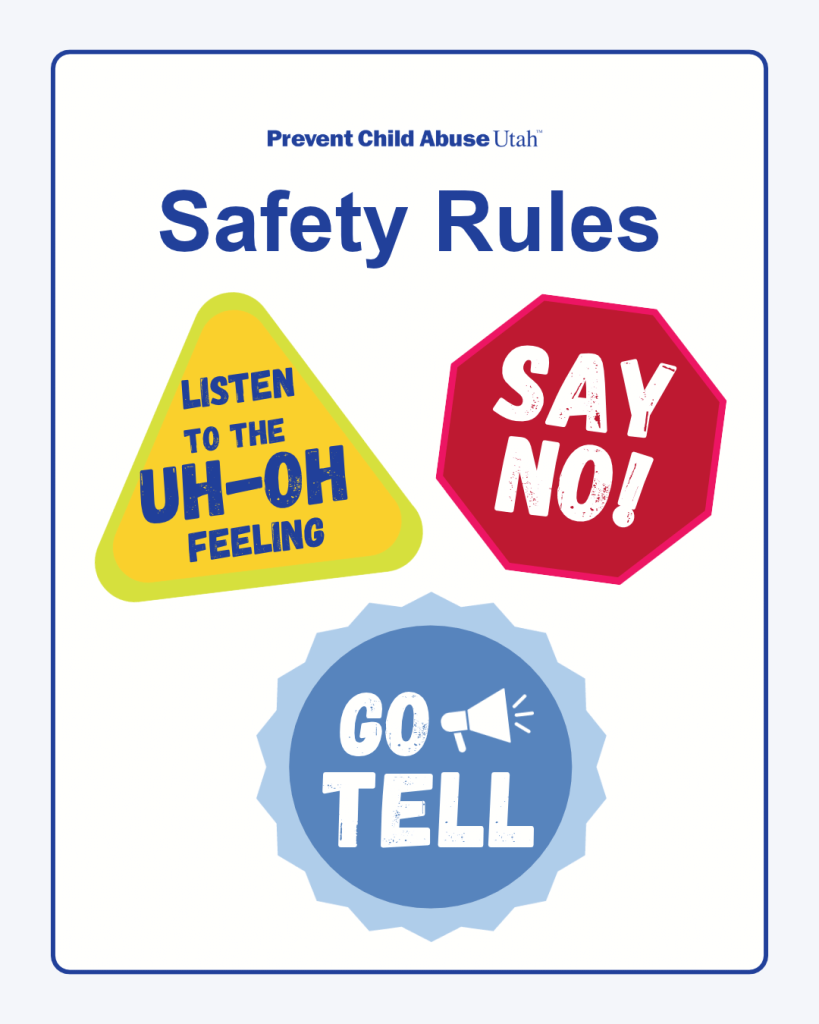

5. Make boundaries an everyday conversation, not just a holiday rule.
Children learn by watching the adults around them. When we respect a child’s “no,” ask permission before giving hugs, avoid pressuring children to participate in activities, and listen when they express discomfort, we show them what healthy relationships look like.
This applies to everyone in the family. Grandparents, aunts, uncles, cousins, parents, and caregivers all play a role in creating a culture where children’s boundaries are respected.
We can remind family members:
- We don’t force our children to hug or kiss anyone.
- We respect our child’s right to say no.
- We don’t ask children to keep secrets.
- We listen when children express discomfort.
- We prioritize children’s safety over an adult’s hurt feelings or expectations.
And remember, boundaries aren’t unkind. They aren’t disrespectful. They aren’t something that gets in the way of family traditions. They keep those family traditions healthy and safe.
Boundaries are an expression of love. When children hear adults setting boundaries, it gives them permission to do the same.
Thanksgiving is for Family
As we gather around the Thanksgiving table, it’s easy to focus on the food, traditions, and time spent together. But one of the greatest gifts we can give the children in our lives is the feeling of safety and the knowledge that they are valued and heard.
We don’t want children to grow up believing they have to hug someone to be polite, keep a secret to make someone happy, or ignore uncomfortable feelings to avoid disappointing an adult. We want them to know that their voices matter. Their bodies belong to them. Their feelings are important. And the adults who love them will always protect them.
This Thanksgiving, let’s be grateful for more than what’s on our plates. Let’s be grateful for the boundaries that protect our children, the conversations that empower them, and the relationships that make them feel safe. Because at the end of the day, Thanksgiving isn’t just about the food. It’s about strengthening family bonds through safety, trust, and love.
From all of us at Prevent Child Abuse Utah, we wish you and your family a safe, happy, and meaningful Thanksgiving!